
A Historic Milestone
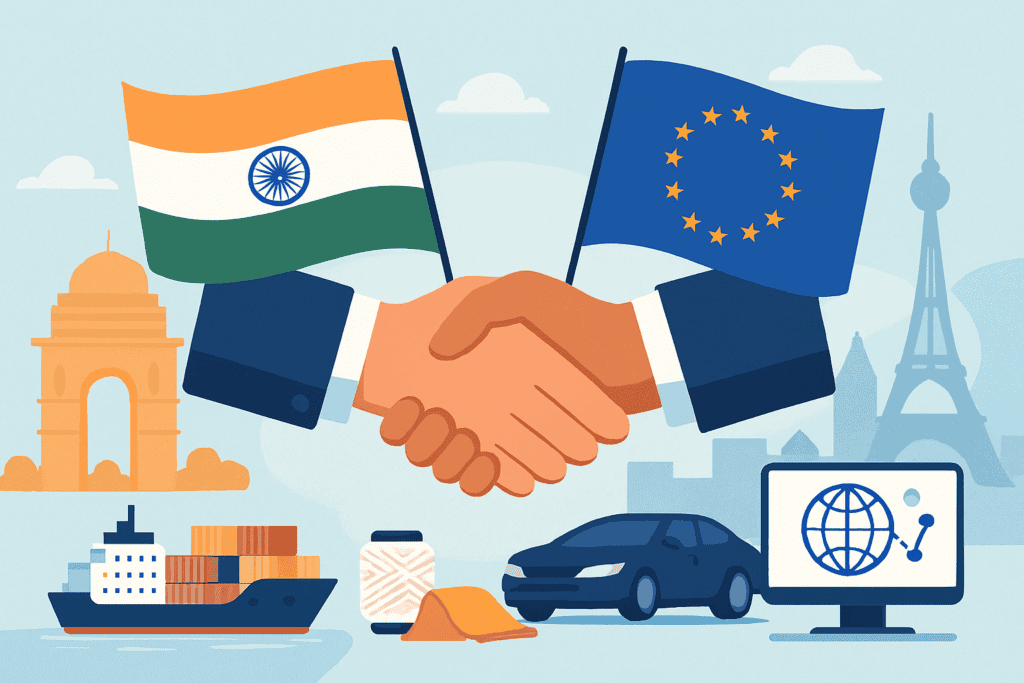
On January 27, 2026, in New Delhi, Prime Minister Narendra Modi and European Commission President Ursula von der Leyen announced the conclusion of the EU-India Trade Agreement (FTA).
EU–India Trade Deal 2026: The ‘Mother of All Deals’ explained. Discover tariff cuts, sectoral winners, and consumer benefits in this landmark FTA. Dubbed the “Mother of All Deals”, this pact connects two of the world’s largest economies, creating a combined market of over 2 billion people. After nearly two decades of negotiations, the agreement signals a new era of trusted partnership between India and the European Union.
Why This Trade Deal Matters
- 20 Years in the Making: Talks began in 2007, paused multiple times, and finally concluded in 2026.
- Global Scale: Covers 25% of global GDP.
- Tariff Savings: Expected to save European businesses €4 billion annually in duties.
- Export Boost: EU exports to India could double by 2032.
- Preferential Access: Over 99% of Indian exports will now enjoy preferential entry into the EU market.
What Gets Cheaper for Consumers
| Product Category | Pre-Deal Tariff | New/Target Tariff |
|---|---|---|
| Luxury Cars | 110% | Gradual cut to 10% (quota-based) |
| Wines | 150% | 75% initially, then 20–30% |
| Spirits | 150% | Reduced to 40% |
| Olive Oil | 45% | 0% (within 5 years) |
| Chocolates & Pasta | 50% | Fully eliminated (0%) |
- Indian Shoppers: Luxury cars, wines, olive oil, chocolates, and pasta become far more affordable.
- European Shoppers: Textiles, footwear, leather goods, and pharmaceuticals from India will be cheaper and more accessible.
Winners by Sector
🇮🇳 India
- Textiles & Apparel: Garment exporters gain parity with competitors from Bangladesh and Vietnam.
- SMEs & Artisans: Dedicated chapter ensures easier access for small businesses and local artisans to EU markets.
- Services & Mobility: New framework allows smoother movement for IT, engineering, and healthcare professionals.
🇪🇺 European Union
- Automobiles: German and French carmakers gain a strong foothold in India’s booming market.
- Agri-Food: Wine, processed foods, dairy-free products, and fruits like kiwis gain privileged access.
- Machinery & Tech: Advanced equipment supports India’s Make in India initiative.
🚫 Sensitive Exclusions
To protect livelihoods, both sides safeguarded certain sectors:
- India: Dairy and sensitive agriculture remain protected.
- EU: Beef, sugar, and rice markets stay shielded.
🌱 Sustainability & CBAM
The deal isn’t just about trade—it’s about the planet.
- Includes a Trade and Sustainable Development (TSD) chapter.
- Addresses the EU’s Carbon Border Adjustment Mechanism (CBAM).
- Provides a platform for Indian exporters to transition to green trade without unfair penalties.
📅 Timeline Ahead
- Legal Scrubbing: 5–6 months of technical review.
- Formal Signing: Expected by mid-2026.
- Implementation: First tariff cuts by late 2026 or early 2027.
Expert Insight:
“This isn’t just a trade pact; it’s a de-risking strategy. By linking India’s manufacturing growth with Europe’s technological prowess, both regions are building a resilient supply chain less dependent on any single country.”
Frequently Asked Questions (FAQ)
- Q1: What is the EU–India trade deal 2026?
It’s a landmark Free Trade Agreement concluded in January 2026 between India and the European Union, covering 25% of global GDP and creating a combined market of over 2 billion people.
- Q2: What products will become cheaper in India under this deal?
Luxury cars, wines, spirits, olive oil, chocolates, and pasta will see major tariff cuts, making them more affordable for Indian consumers.
- Q3: How will Indian exporters benefit from the EU–India FTA?
Indian businesses gain preferential access to the EU market, especially in textiles, pharmaceuticals, engineering goods, and services. SMEs and professionals also benefit from easier mobility and reduced trade barriers.
- Q4: Which European sectors gain the most from this agreement?
Automobiles, agri-food, and industrial machinery sectors benefit significantly. EU producers gain access to India’s fast-growing consumer base and manufacturing ecosystem.
- Q5: Are any sectors excluded from the trade deal?
Yes. India protected its dairy and sensitive agricultural sectors, while the EU safeguarded its beef, sugar, and rice markets.
- Q6: What is CBAM and how does it affect Indian exporters?
CBAM (Carbon Border Adjustment Mechanism) is the EU’s climate policy tool. The deal includes a sustainability chapter to help Indian exporters transition to greener standards without facing penalties.
- Q7: When will the EU–India trade deal take effect?
After legal review, the formal signing is expected by mid-2026. Tariff cuts are likely to begin by late 2026 or early 2027.
Final Takeaway
The EU–India trade deal is more than an economic agreement—it’s a strategic partnership shaping the future of global commerce. For India, it means growth, jobs, and global recognition. For Europe, it’s a gateway to one of the fastest-growing economies.