
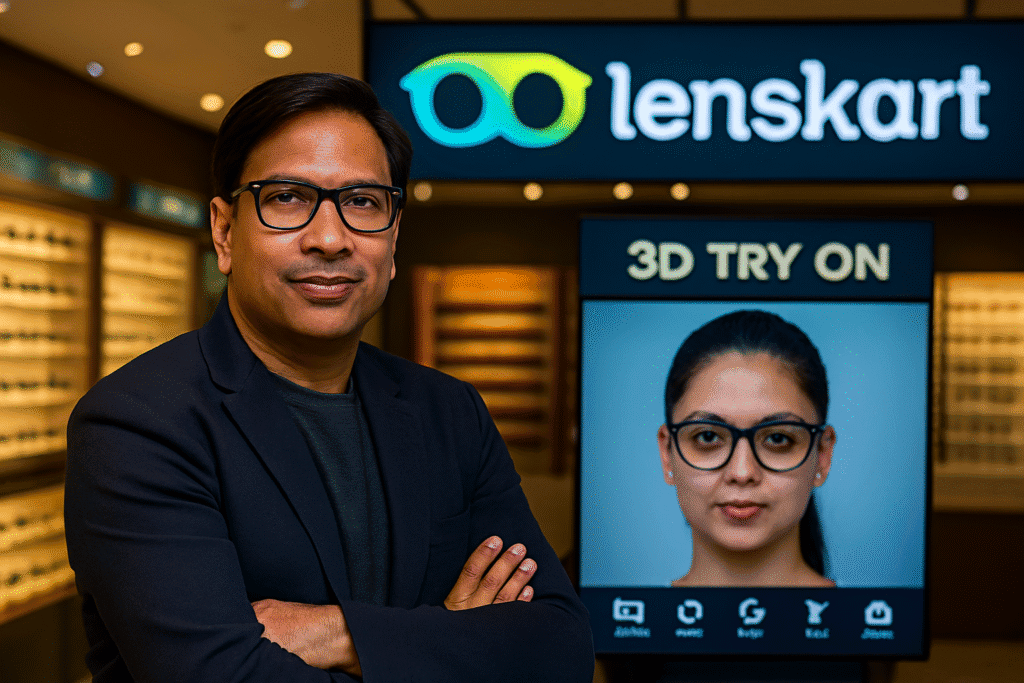

Introduction: A Vision Beyond Glasses
In a country where over 30% of the population needs corrective eyewear, but only a fraction actually wears it, one startup dared to change the narrative. Founded in 2010 by Peyush Bansal, Amit Chaudhary, and Sumeet Kapahi, Lenskart began as a small online venture in Delhi NCR. Today, it is not just India’s largest eyewear brand but also a unicorn startup valued at over $5 billion, with a presence in India, Singapore, and the Middle East.
At its core, Lenskart’s mission is simple yet powerful: to make eyewear accessible, affordable, and aspirational.
Founder Background: The Man Behind the Vision
Peyush Bansal, the face of Lenskart and a household name thanks to Shark Tank India, didn’t have a straightforward journey.
- Born in Delhi, Peyush studied at McGill University, Canada, and later worked at Microsoft in the US.
- Despite a lucrative career, he felt a strong pull toward solving real problems in India.
- His philosophy: “If you want to build something meaningful, solve a problem that impacts millions.”
This mindset led him to return to India and experiment with multiple ventures before zeroing in on eyewear.
Startup Journey & Timeline
- 2010: Lenskart launched as an online platform for contact lenses.
- 2011–2012: Expanded into eyeglasses and sunglasses.
- 2013: Secured early funding from IDG Ventures and Unilazer Ventures.
- 2014–2016: Opened offline stores, pioneering the “clicks + bricks” model.
- 2019: Crossed 500 stores nationwide.
- 2022: Entered the unicorn club with backing from SoftBank.
- 2025: Preparing for a much-anticipated IPO.
Innovation & Impact
Lenskart disrupted an industry long dominated by unorganized players.
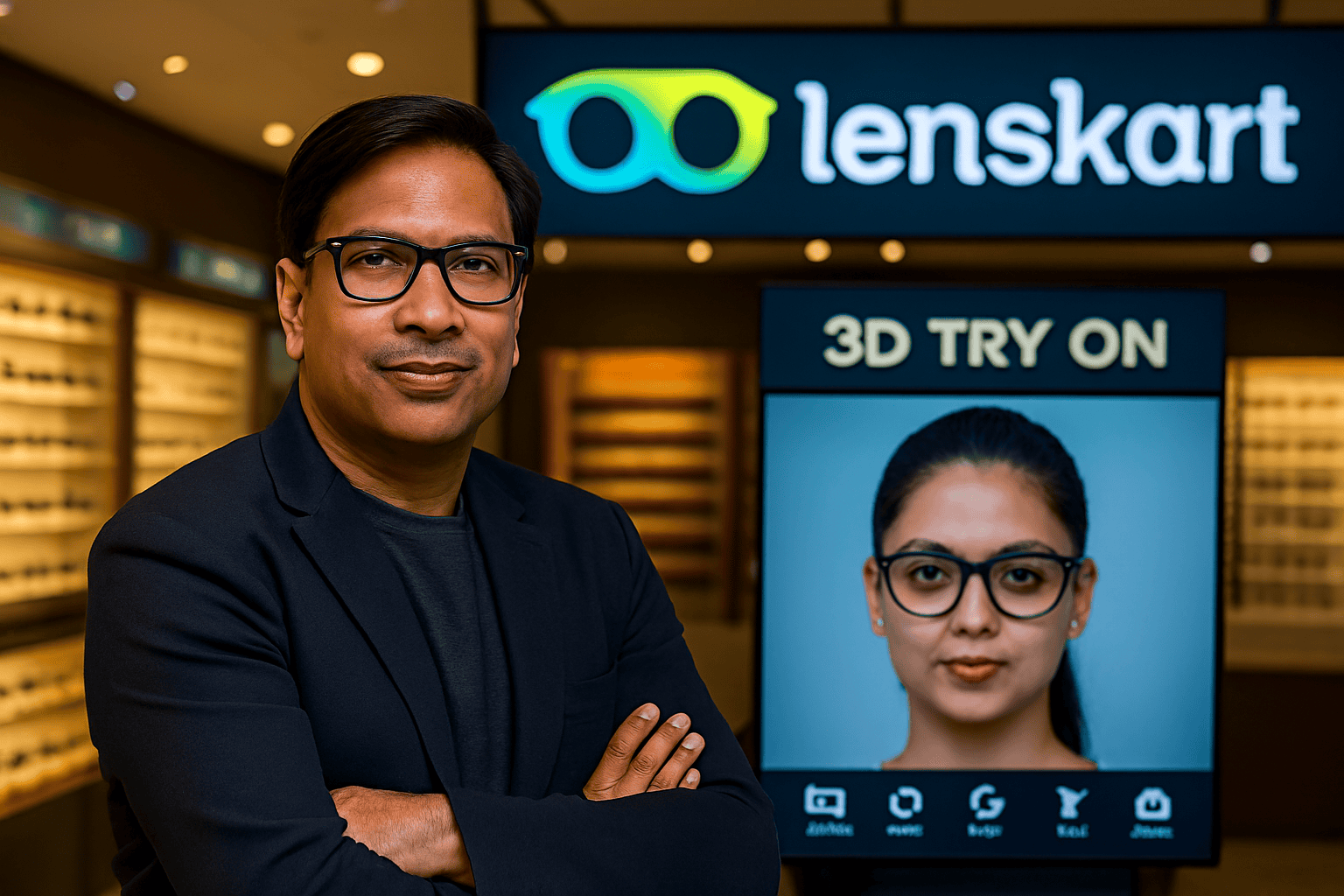
- Technology: 3D Try-On feature, AI-driven recommendations, and home eye-checkups.
- Pricing: Direct-to-consumer model cut middlemen, making eyewear 30–40% cheaper.
- Impact: Expanded aggressively into Tier 2 and Tier 3 cities, democratizing access to quality eyewear.
Business Model & Strategy
Lenskart’s success lies in its hybrid model:
- Revenue Streams: Eyeglasses, sunglasses, contact lenses, accessories, and eye exams.
- Customer Segments: Urban millennials, families, and underserved rural markets.
- Differentiation: Style + affordability + convenience.
With over 20 million customers served, Lenskart has positioned itself as both a healthcare provider and a fashion brand.
Funding, Valuation & Growth
- Seed & Series A: IDG Ventures, Unilazer Ventures.
- Series B–D: TPG Growth, IFC, PremjiInvest.
- SoftBank Vision Fund: Major investor, propelling valuation beyond $5 billion.
- 2025 IPO: Expected to be one of India’s biggest consumer-tech listings.
Challenges, Failures & Lessons Learned
Like every startup, Lenskart faced hurdles:
- Scaling logistics in a fragmented supply chain.
- Building trust in online eyewear purchases.
- Managing rapid offline expansion without losing quality.
Peyush Bansal often emphasizes resilience: “Failures are tuition fees for success. What matters is how fast you learn.”
Future Vision
Lenskart’s roadmap is ambitious:
- Global expansion into Southeast Asia and the Middle East.
- Tech-driven personalization with AI-powered eye health solutions.
- IPO launch, cementing its place as a global eyewear leader.
As Peyush puts it: “We don’t just sell glasses; we sell confidence, clarity, and a better tomorrow.”
Conclusion: Lessons from Lenskart’s Journey
The Indian startup story of Lenskart is more than a tale of eyewear—it’s a blueprint for solving real problems with innovation, resilience, and vision.
For aspiring entrepreneurs, the message is clear: find a problem worth solving, stay resilient, and scale with purpose.

Thanks for sharing. I read many of your blog posts, cool, your blog is very good.
Thanks for sharing. I read many of your blog posts, cool, your blog is very good.